

09 Jul, 2026
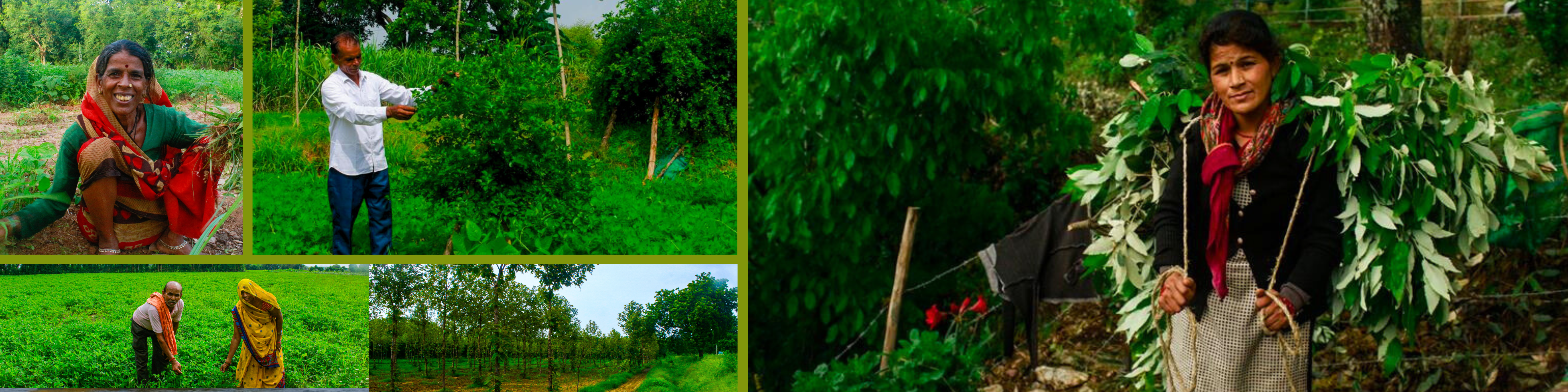
Imagine community collectives, self-help groups (SHGs) and farmer producer organisations (FPOs), especially women-led groups, successfully leading grassroots innovation in forest and agroforestry-based entrepreneurship. We would see a rise in local enterprises that are ecologically sound, socially inclusive and economically viable, and women as decision-makers, enterprise leaders, and active innovators.
This is the narrative the ‘Strengthening Gender Responsive Forest Ecosystems Management and Agroforestry’ (G-VAN) project is investing in and leveraging the strong push of the Indian government to promote formation and strengthening of collectives. Being implemented in Himachal Pradesh, Madhya Pradesh, Uttarakhand and Uttar Pradesh, the project is supporting these collectives by inclusion of gendered viewpoints in existing policies and implementation practices, strengthen business development, provide technical support, resources and build capacity to execute planned activities.
Recognising their vital role in ensuring sustainable forest and agroforestry management and economic empowerment, the project is capacitating these collectives to transition to more resilient green enterprises by reducing barriers of limited technical capability, high initial investment, and uncertain economic returns. The project recently organised a gender sensitisation and financial literacy training for the Nadaun Women’s Farmers’ Producer Organisation in the Hamirpur district of Himachal Pradesh which reinforced the importance of collective platforms in enabling access to markets, resources, and decision-making spaces. Similarly, trainings on forest fire management have been planned for groups dependent on non-timber forest products (NTFPs) like pine needles for income generation. These trainings would help prevent forest fires, restore ecosystems and create sustainable income.
The project will continue strengthening these collectives through long-term, systematic hand-holding approach that simultaneously targets interventions in the institutional, planning and implementation aspects by providing both technical and soft skills training, support women leadership, and demonstrate scalable models of income generating measures, empowering women collectives both as ecological stewards and economic actors in the landscape.
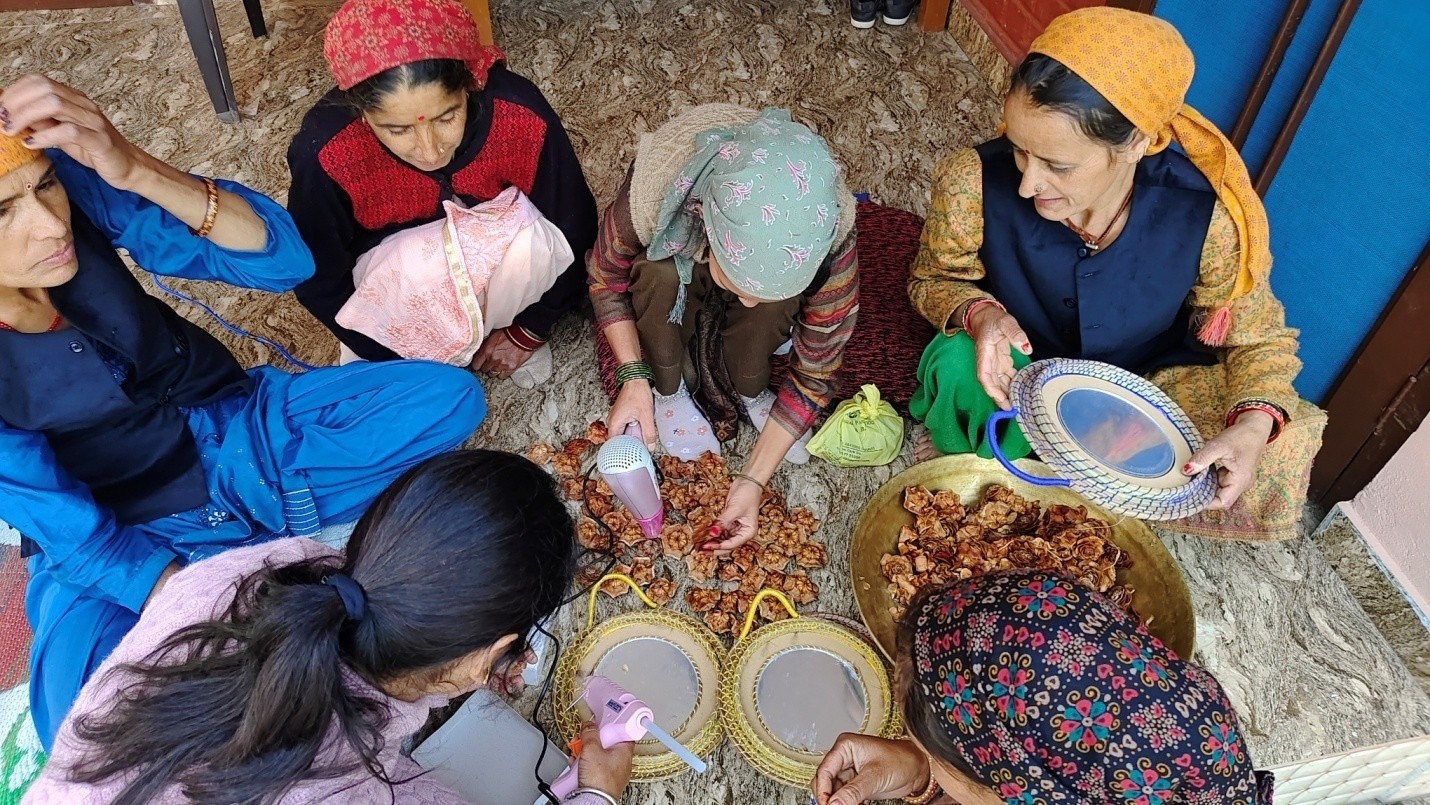 Utilising forest resources - Cedar cones and Chir Pine needles for handicraft © Karvan Society
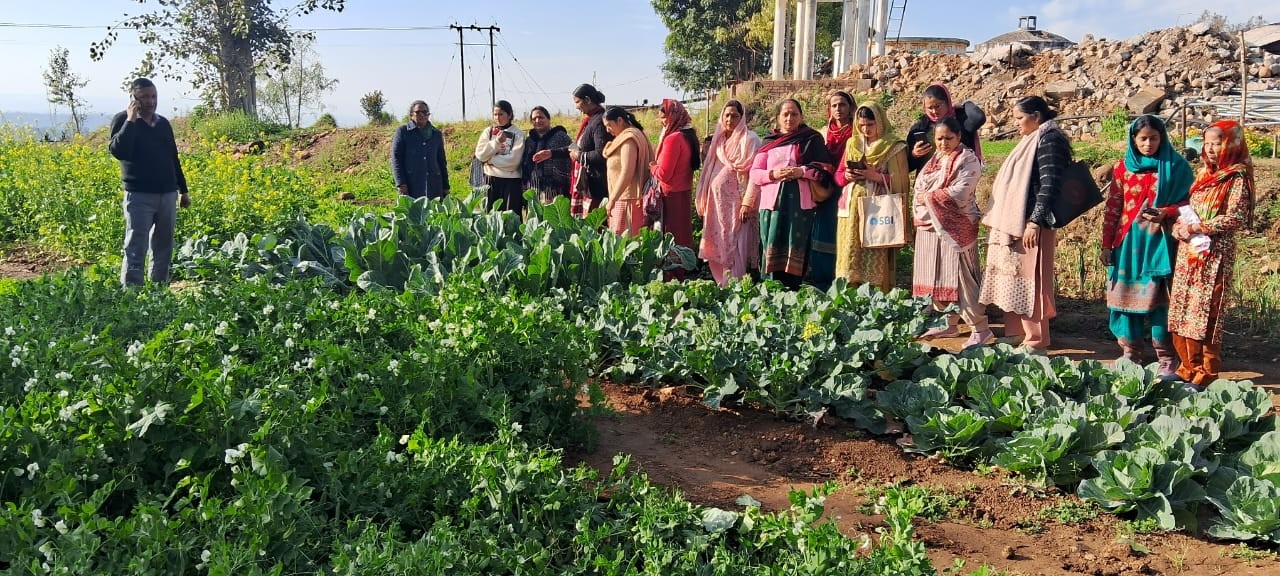 Members of the Nadaun Women's FPO being trained in agroecological practices © Naduan Women’s FPO
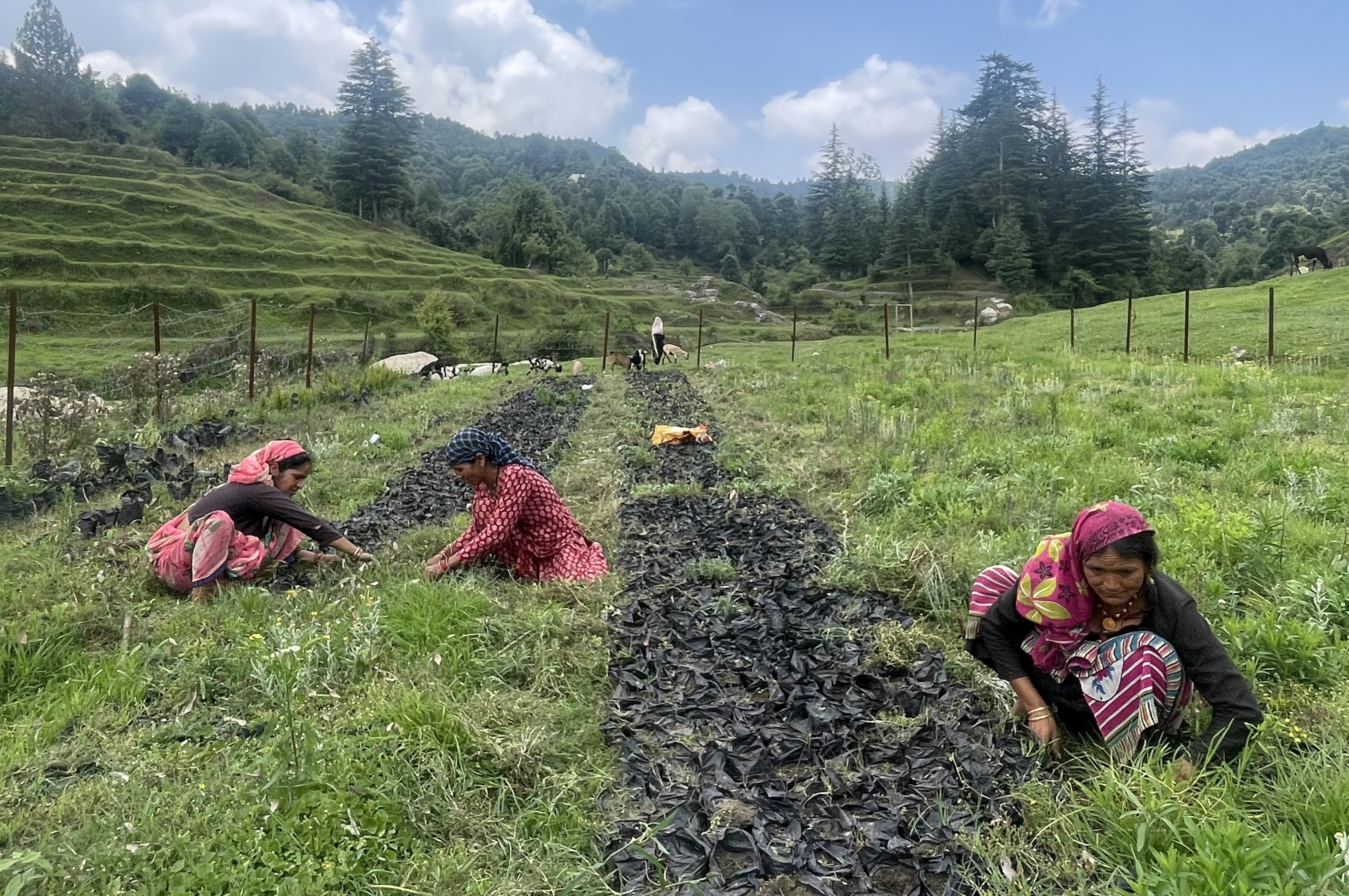 Members of the SHG involved in tending the nursery © GIZ/Yashaswini Choudhary
*
The Strengthening Gender Responsive Forest Ecosystems Management and Agroforestry (G-VAN) project promotes gender- and climate-resilient forest and agroforestry management to sustain natural resources and improve livelihoods in the states of Himachal Pradesh, Madhya Pradesh, Uttarakhand, and Uttar Pradesh Commissioned by the German Federal Ministry for Economic Cooperation and Development (BMZ) and the European Union, the project is led by India’s Ministry of Environment, Forest and Climate Change (MoEF&CC) as the executing agency. It is implemented by the Deutsche Gesellschaft für Internationale Zusammenarbeit (GIZ) GmbH. A separate component supported by the European Union is being implemented in Rajasthan. Read More
For more information contact: biodiv.india@giz.de
© 2014 IGBP. All Rights Reserved.
Site By: Virtualpages
